Ordering Shake Shack through a delivery app
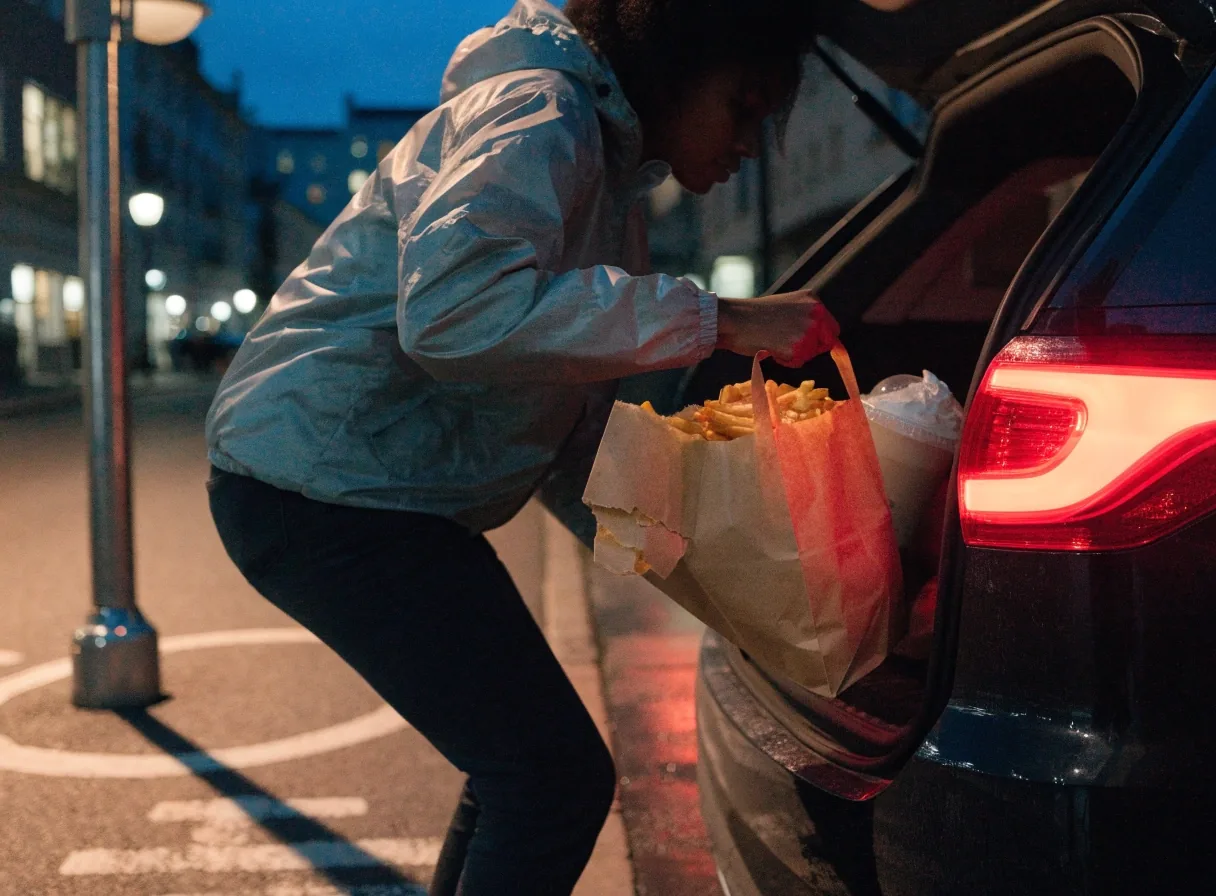
Delivery changes what you get. A burger that is excellent at the counter can arrive lukewarm, crinkle-cut fries that were crisp can arrive soft, and a shake can separate on the way.
None of that means delivery is a bad idea. It means the order you place should account for the trip, not just the menu. This guide covers how US delivery apps handle chain food, what to expect from the major platforms, and how to build an order that survives the drive.
What this page answers
Which apps carry a Shake Shack near you, how the fees stack up against the counter menu, which items hold up over the drive, and how a group order should be built so nothing arrives ruined.
The three platforms you will actually use
Grubhub, DoorDash, and Uber Eats are the three apps most Seattle readers will open. Grubhub remains a major US restaurant delivery app and still shows up in urban and campus-heavy markets, though it generally sits behind DoorDash and Uber Eats in overall market prominence. All three carry chain restaurants, and all three work the same basic way: browse, order, track.
The difference that matters is location coverage. Not every Shake Shack location is listed on every app, and availability can change by neighborhood or by day. Check the app you plan to use before you build an order around it.
DoorDash
Has the broadest restaurant coverage in most US markets, which usually means the deepest list of nearby chain locations to choose from.
Uber Eats
Strong coverage too, and it lives inside the wider Uber app, which some readers prefer because one account handles rides and food.
Grubhub
Its advantage is dense urban areas and campuses, where its restaurant marketplace is still competitive and its coverage of smaller independent kitchens runs deep.
None of these differences are dramatic for a single chain order. The practical question is which app lists the location closest to you, and which one carries fees you are willing to pay.
How fees actually work
Delivery apps charge a mix of item markups, delivery fees, service fees, and optional tips. The line that surprises people most is the item markup, so it is worth naming plainly.
Prices inside an app are often higher than the restaurant's own menu. That gap is how the platform gets paid. It is usually small per item and adds up across a full order.
Varies by distance, time of day, and how busy the area is. It is usually quoted before you reach checkout, so it belongs in your comparison.
Usually a percentage of the subtotal, which means it grows with the order. A larger group order pays more here than a single sandwich does.
The one line you control completely. It is also the line most often left out of a comparison that stops at the subtotal.
Price the same order on two apps and read the final total including tip. That is more work than most people do, and it is the only number that reflects what you actually pay.
What travels well and what does not
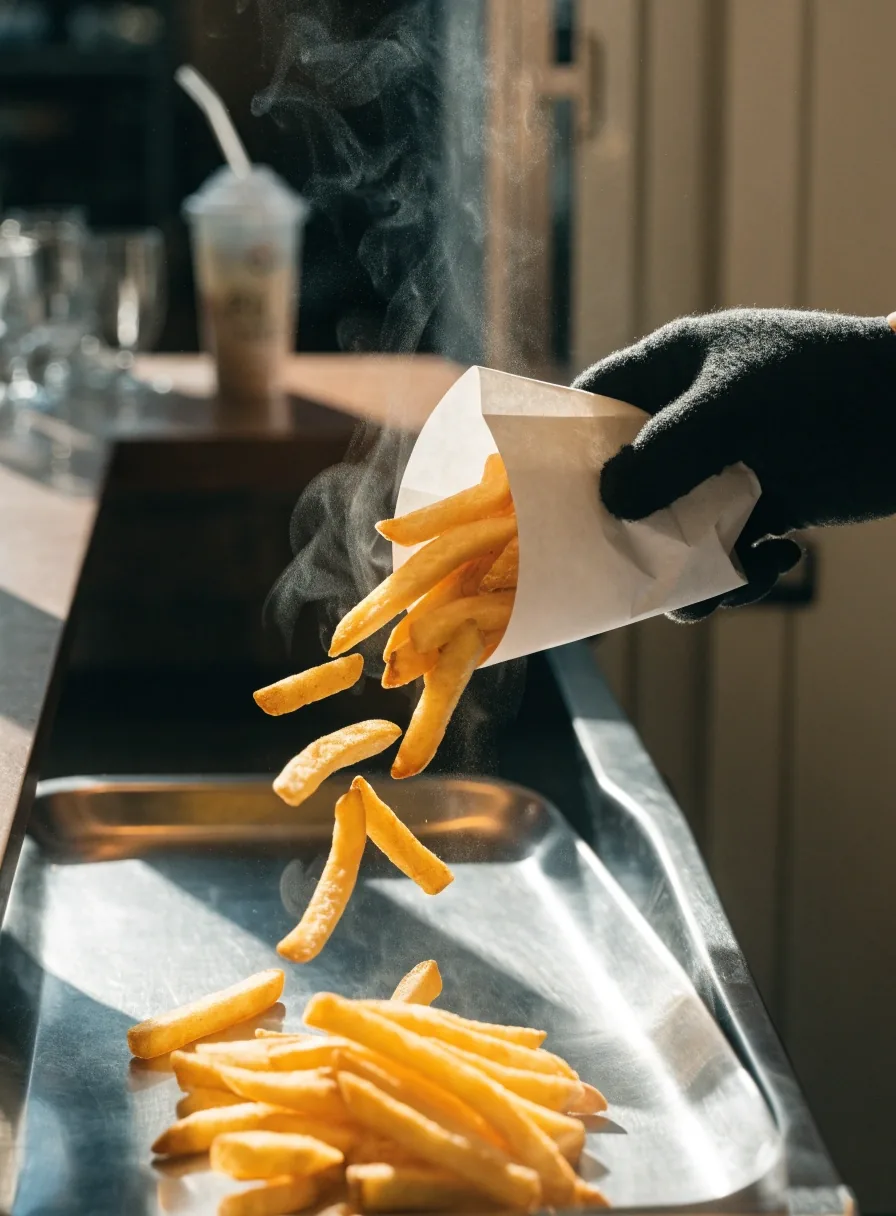
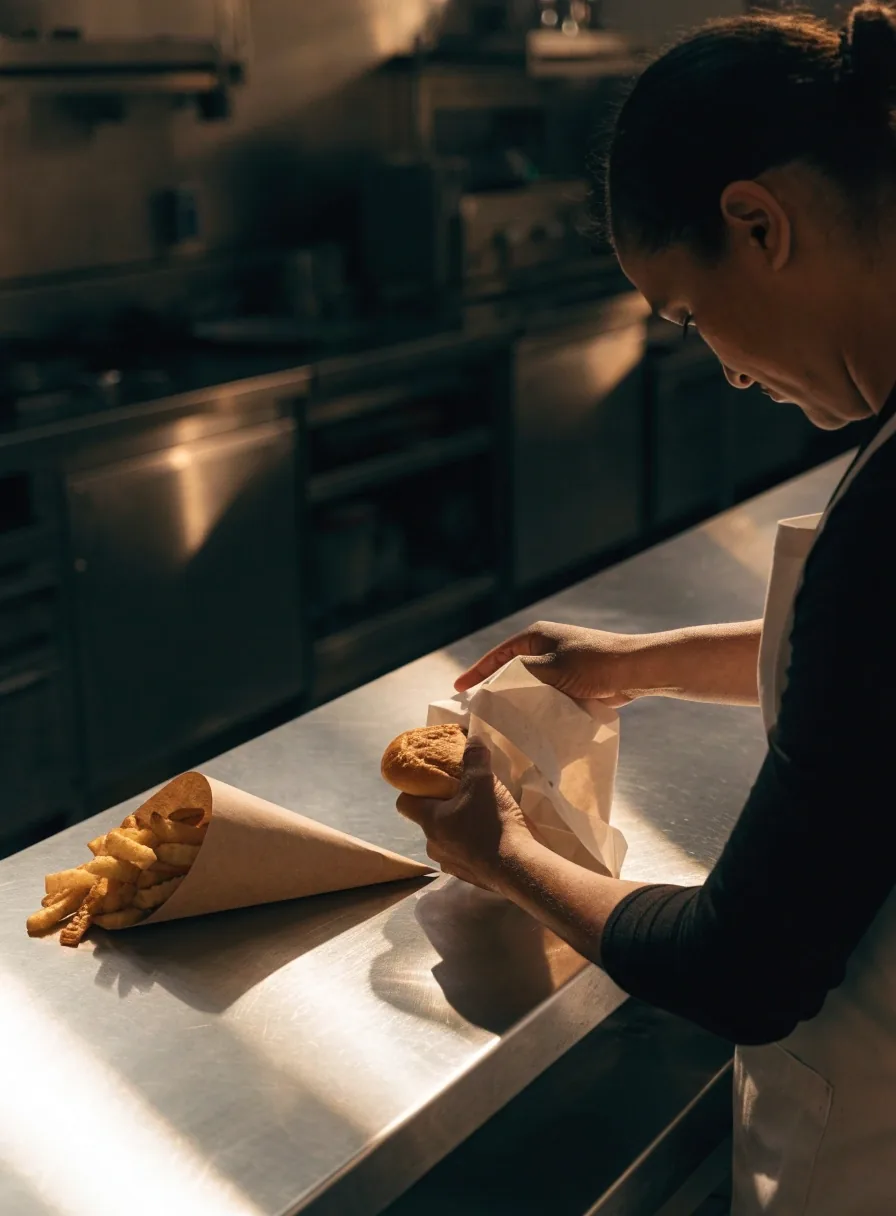
Burgers and chicken sandwiches travel well. Shakes travel acceptably. Plain fries travel poorly, and loaded fries travel slightly better because the toppings hold heat and moisture. Desserts with a topping element travel worst, because the topping sits and softens the whole way.
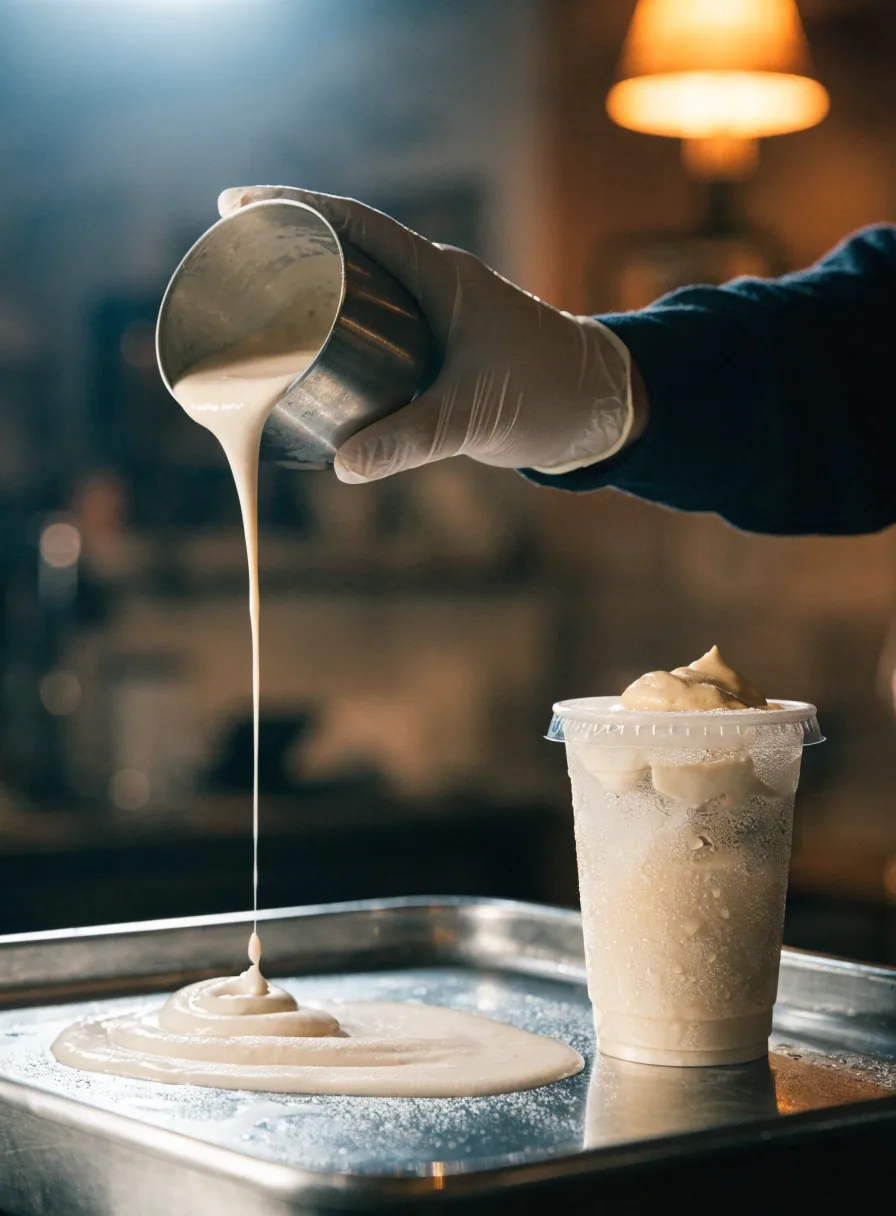
Travel grade · burger and sandwich lead, fries trail
This is not a reason to avoid ordering fries. It is a reason to eat them first when the bag arrives, and to order fewer of them than you would at the counter.
Packaging and how chains handle it
Chain restaurants tend to have standardized packaging, which is good for consistency and mixed for temperature. Burgers wrapped in paper hold heat better than burgers in a rigid clamshell, because the paper lets some moisture escape. Fries in a closed box steam and soften.
If an app lets you leave a note about packaging, it is worth doing. Sauce on the side is the most useful request you can make, because sauce applied in the kitchen soaks the bun during travel.
One request worth typing
The delivery-first lesson
What Shake Shack can learn from delivery-first brands
Domino's built its operation around delivery rather than adding it later, and the difference shows in how its food arrives. The pizza box is designed for the trip, the temperature holds longer, and the order is planned around a delivery window instead of a pickup counter.
Burger delivery cannot copy that model exactly, because burgers and fries degrade faster than pizza does. The principle still applies: the further the food travels, the more you should lean on items that were built to survive the trip.
Food arrives at different temperatures depending on what it is, and people eat at different times. The order that works best is a mix of burgers and chicken sandwiches, more sandwiches than fries, and drinks that do not depend on temperature.
Ordering for a group
Shakes for a group are a mixed idea. They are popular and they arrive fine, but they are the item most affected by sitting out. If the group is eating immediately, order them. If the food will sit through the meeting or the game, skip them and handle dessert separately.
Building an order that arrives well
The list below is the short version, and it is the part most people skip. It assumes nothing about which app you use — the mechanics are the same whether you order through Grubhub, DoorDash, or Uber Eats.
Pick items that hold structure
Burgers, chicken sandwiches, and shakes are the safe spine of a delivery order. They keep their shape and their flavor through a normal drive, which is not true of everything on the menu.
Order fewer fries than usual
Choose loaded fries over plain if you are sharing, since the toppings hold up marginally better. Ask for sauce on the side. Eat the fries first when the bag lands on the table.
Scale with sandwiches, not fries
For more than two people, add extra sandwiches rather than extra fries. Sandwiches survive the trip best, and they are what people actually reach for when the food arrives.
Realistic expectations and how to set them
Expect the food to be slightly different from the restaurant version. Expect the fries to be softer. Expect the shake to need a stir. None of these are failures of the app or the restaurant. They are what happens when hot food travels.
-
Order items that hold up. The menu is deep. Choose from the part of it that survives a drive instead of treating every item as equally deliverable.
-
Eat quickly when the bag arrives. Fries lose their window in minutes, not hours. Opening the bag and starting on the fries is the single biggest change you can make.
-
Use notes where the app allows them. Sauce on the side, extra napkins, leave the drink lid loose — small requests that change how the order arrives.
-
Stop hoping for a counter-identical meal. That expectation produces a worse dinner than planning the order around the trip in the first place.
Questions readers ask before ordering
Which delivery app is best for ordering Shake Shack? Coverage
DoorDash and Uber Eats generally have the broadest coverage in US markets, while Grubhub remains strong in dense urban and campus-heavy areas. The practical answer depends on which app lists the location closest to you, and what the total cost looks like with fees and tip.
Why are app prices higher than the restaurant's menu? Pricing
Delivery platforms charge a commission, and one common way restaurants cover it is by setting slightly higher item prices inside the app. The markup is usually small per item and adds up across an order, so the subtotal is not the fairest place to compare two apps.
What should I avoid ordering for delivery? Menu picks
Plain fries are the item most likely to disappoint, because they cool and soften in a closed container. Desserts with a topping element also suffer. Burgers, chicken sandwiches, and shakes travel best, which is why they are the sensible spine of a delivery order.
Sort the menu before the app
Knowing which Shake Shack items hold up in transit is half the decision. The other half is knowing which ones you actually want, and that is what the menu guide and the sandwich comparison are for.
skavro is an editorial guide for Seattle-area fast-food readers. Ordering questions, delivery notes, and menu corrections are welcome at info@skavro.delivery or +12068124940.
728 19th Ave, Seattle, WA 98122 · Mon–Sun, 10:00–22:00